Jelajah
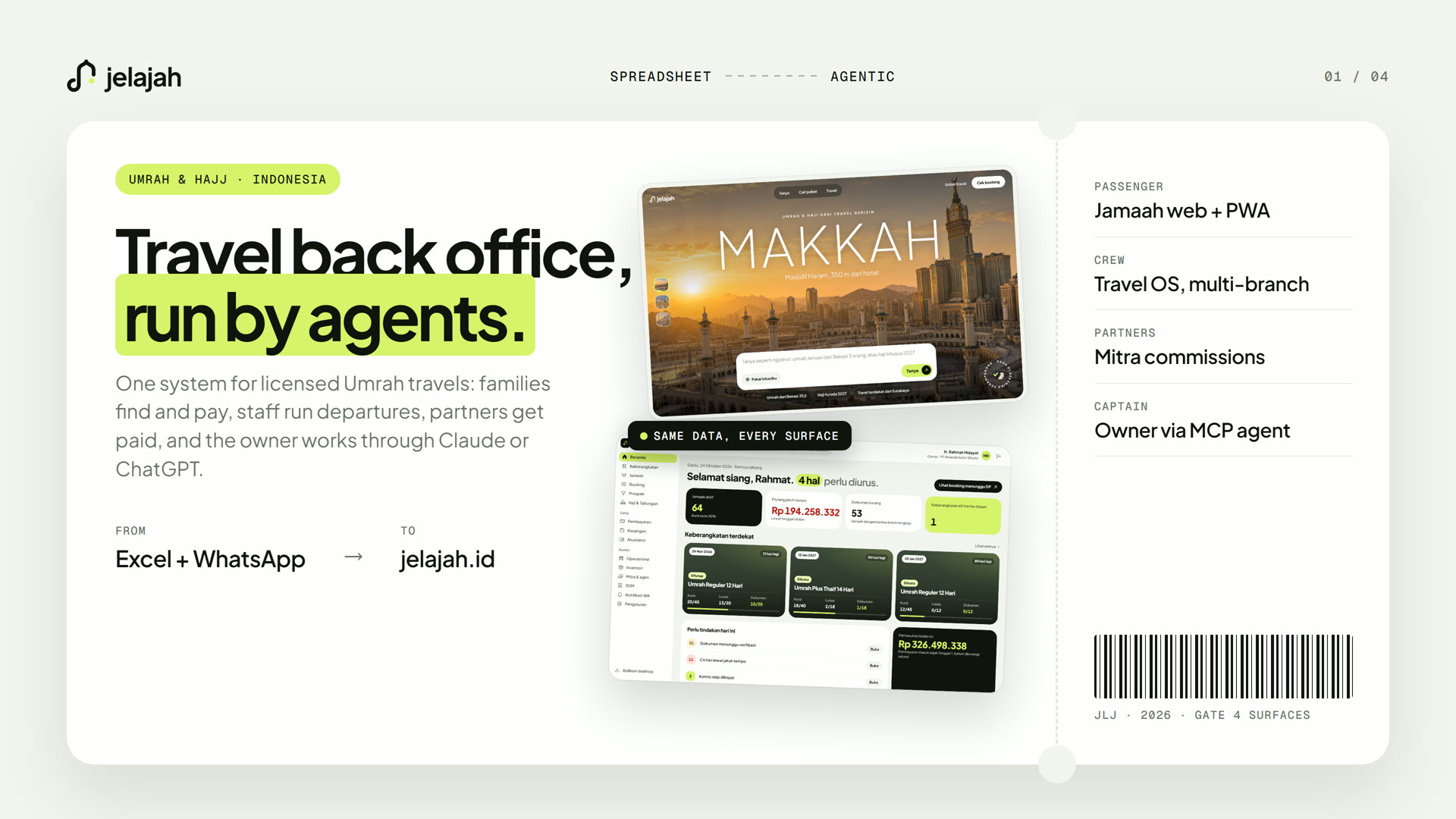
An operating system for Umrah and Hajj travels in Indonesia, built so the owner can run it through an AI agent.
- Klien
- Jelajah
- Peran
- Tahun
- 2026
- Stack
- TypeScript monorepo, TanStack Start, React 19, Vite, Tailwind CSS 4, Hono + oRPC API, OpenAPI 3.1, Model Context Protocol server, Drizzle ORM, PostgreSQL, Caddy, PWA
Problem
Most Umrah travels still run on spreadsheets and WhatsApp. Pilgrim documents, instalments, seats per departure and partner commissions live in different files, and the owner has to chase staff for every number. Families looking for a trip cannot easily tell which travel is licensed and close to them.
What we built
One backend and four connected surfaces. - Jelajah.id: families ask in plain words ("umrah in January from Bekasi, 3 people, 35 million"), see licensed travels on a map, and compare clear package prices. - Pilgrim portal (PWA): a WhatsApp magic link, no password. Bills, virtual-account payments, instalments, document upload and trip preparation on the phone. - Travel OS: a multi-branch back office. A morning home that lists what needs action today, bookings with payment status, pilgrims and their documents, and seats per departure. - Partner (mitra) system: ustadz, agents and affiliates in one list, five agreement schemes, a three-tier network with override, commission from accrued to paid, and PPh 21 on payout. Partners get a read-only portal link over WhatsApp.
Agent-first
Travels connect Claude, ChatGPT or other assistants through an MCP server. An agent can migrate the old spreadsheet in one click and handle daily work, while refunds, cancellations and withdrawals wait for the owner's approval and are logged. A public MCP and REST API let any assistant answer "which licensed travel near me" from live data.